Cold Weather Ready: How to Make Sure Your Standby Generator Starts at -30°C
Backup power isn’t a luxury when winter is serious. It’s a reliability system—and winter is the stress test.
A standby generator is easy to appreciate when the lights go out. But in the Yukon, what matters isn’t just whether you have a generator—it’s whether that generator starts and carries load reliably in extreme cold.
Cold changes everything engines depend on:
- batteries get weaker,
- oil thickens,
- moisture freezes,
- snow drifts block airflow,
- and small maintenance issues become big ones at exactly the wrong time.
This guide is built for homeowners and small businesses in and around Whitehorse who want a standby generator setup that’s designed for winter reality—not brochure conditions.
Moffat Electrical Contractors are Generac installers and service providers in Whitehorse, offering installation and ongoing service. The goal here is to give you an informed framework so you can ask the right questions and avoid the most common cold-weather failure points.
First: how standby systems stay safe during outages
A standby generator system is typically installed with an automatic transfer switch (ATS). This is not a “nice-to-have”—it’s the traffic controller that prevents dangerous overlap.
Generac explains that a transfer switch prevents your home from being powered by utility and generator at the same time; when utility power is lost, the generator control panel senses it and tells the transfer switch to disconnect utility and connect the generator.
So: the generator isn’t just an engine. It’s part of an integrated system that’s designed to power your home safely and automatically.
Why cold causes standby generators to fail when they’re neglected:
1) The battery is the most common weak link
Cold reduces battery performance. Even if the generator is mechanically fine, a weak or cold-soaked battery can mean slow cranking—or no start at all.That’s why cold-weather support often includes battery warming.
2) Thick oil makes starting harder
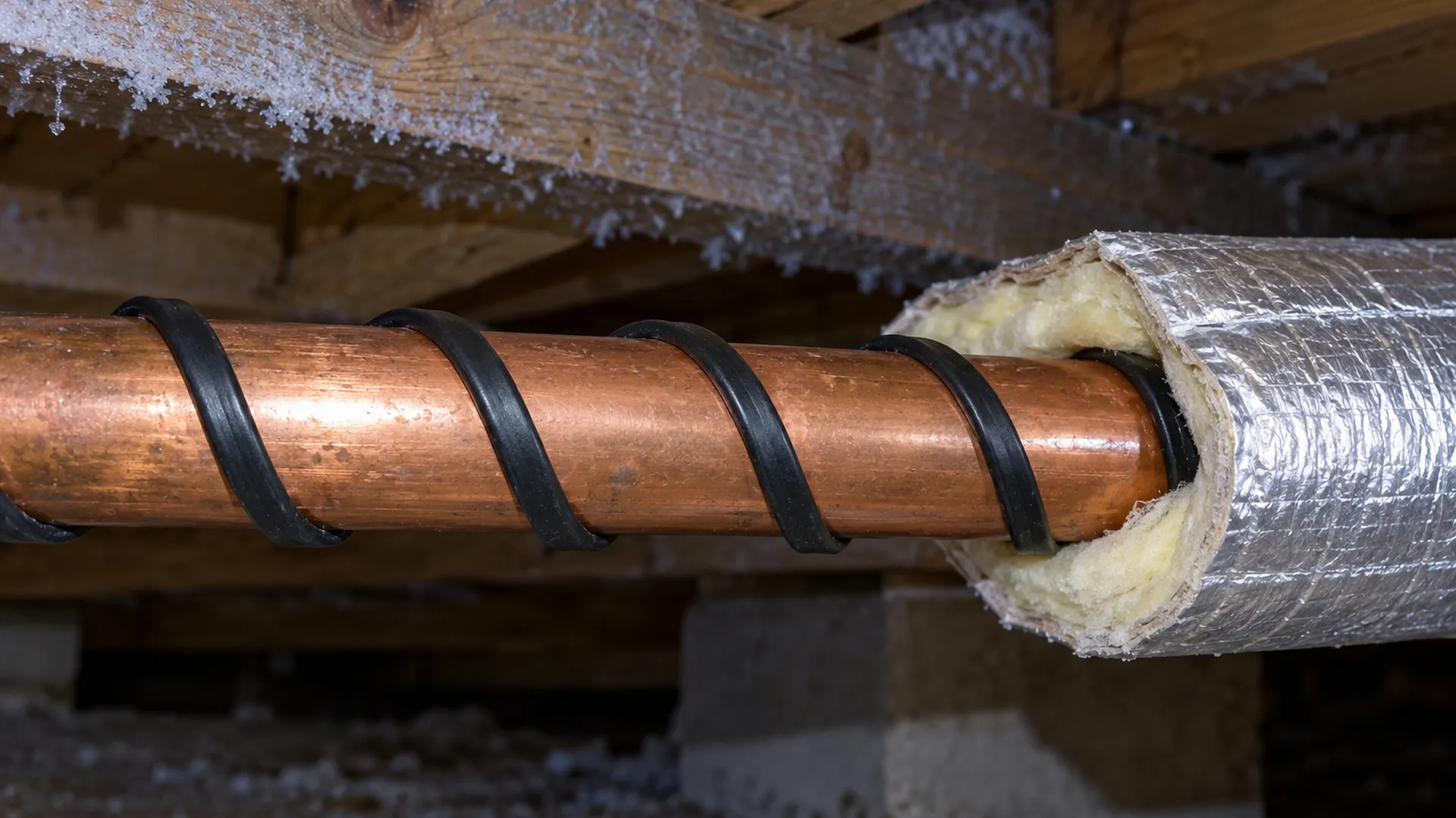
As temperatures drop, oil viscosity rises. The engine has to fight that resistance during startup. Cold-weather strategies often include crankcase heating and an oil choice appropriate for cold starts.
3) “It ran last year” is not a guarantee
Standby generators sit idle most of the time. Components can degrade quietly:
- battery aging
- rodents nesting
- corrosion at terminals
- snow/ice buildup around the unit
- clogged air intake
- minor faults that only appear under load
The fix isn’t anxiety—it’s a routine that keeps the machine ready.
The single most important winter feature: exercise cycles
Many homeowners are surprised the first time their standby generator starts on its own while utility power is still on. That’s normal.
Generac explains that home standby generators perform scheduled exercises to test functionality and ensure proper operation, including different modes and settings depending on model.
Generac also provides guidance for setting the scheduled exercise date and time on newer and older models (including through the control panel or Mobile Link, depending on model). See here for details.
In Yukon conditions, the exercise cycle is more than a “self-test.” It’s how you find out you have a battery issue, a heater issue, or a fault code before the outage forces the lesson.
If your generator isn’t exercising on schedule, treat that as a service issue.
Cold Weather Kits and accessories: what they do and why they matter
Not every model uses the same accessories, but Generac publishes cold weather kit documentation (for certain series) describing components designed to support cold starting.
For example, one Generac cold weather kit spec sheet describes a kit consisting of:
- an automatic thermostatically controlled battery pad warmer
- a crankcase heater
- and a breather warmer
The principle is simple:
- warm the battery so it can deliver starting power,
- warm the oil so the engine turns over more easily,
- reduce icing/condensation issues around breathing and vapor pathways.
That same documentation notes cold-weather guidance such as using appropriate oil (the spec sheet references synthetic 5W-30 for better cold starting when installing the kit).
Bottom line:
If your backup plan assumes the generator must start in deep cold, cold-weather equipment isn’t “extra.” It’s part of system reliability.
Placement and site conditions: winter reliability starts with where it sits
A standby generator is outdoors. That’s good for safety—but it also means you’re dealing with snow, wind, and ice.
Here are the practical Yukon placement considerations that often matter most:
1) Keep it out of drift zones
A generator needs airflow. If prevailing winds create drifts that bury the unit or pack the intake/exhaust area, performance and safety can be compromised.
2) Plan for service access in winter
Oil changes, inspections, troubleshooting—these must be possible when there’s snow on the ground. If the unit is boxed into a narrow, icy corridor, servicing becomes slower and more expensive.
3) Don’t create an exhaust hazard
Standby units are designed for outdoor operation, but exhaust still needs proper clearance and safe siting. If snowbanks, decks, or adjacent structures funnel exhaust toward openings, that becomes a risk. This is one reason professional siting matters.
Fuel considerations: propane/natural gas planning is part of “will it run?”
Fuel topics vary by property, but the practical point is universal:
A generator can only be as reliable as its fuel supply and delivery system.
For propane setups, winter planning often includes:
- ensuring adequate fuel storage for realistic outage durations,
- protecting regulators and lines from icing and snow damage,
- maintaining access for refills.
For natural gas setups, the reliability conversation is different (continuous supply vs local storage), but the key remains: the system has to be designed for your specific conditions.
This is exactly where a local installer provides value: they’ve seen what fails in local winters.
Homeowner winter checklist: what you can do without tools or risk
You don’t need to open panels or remove covers to do useful checks. These are safe, common-sense actions:
- Keep the area clear: remove snow buildup around the unit, maintain access paths, avoid storing items against it.
- Watch for alerts: if the control panel shows warnings or status lights, don’t ignore them.
- Confirm it’s in AUTO: many “it didn’t start” calls come down to the unit being left off after maintenance.
- Notice exercise behavior: does it run when scheduled, and does it sound normal? (If it struggles, that’s information.)
- Listen and smell: unusual noises or odors are early warnings—same principle as house wiring issues.
If anything seems off, don’t wait for an outage to force the issue.
Pro-grade reliability: what an electrician/service provider adds
A winter-ready install isn’t only “hook it up and go.” It’s:
- correct generator sizing for your load plan
- correct transfer switch selection and configuration
- code-compliant wiring and permitting
- cold-weather accessories where appropriate
- commissioning and verification (including exercise configuration)
- a maintenance path so the system stays reliable over years
Electricians at Moffat Electrical are certified in diagnostics, maintenance, and repair of all Generac products, serving Whitehorse for residential/commercial/industrial installation and service.
That “after installation” capability matters in the Yukon. Reliability isn’t just purchase—it’s upkeep.
A quick compliance note for Yukon projects
If you’re doing electrical work tied to generator installation or transfer equipment, permits and code compliance matter.
The Government of Yukon has a bulletin confirming adoption of the 2024 Canadian Electrical Code effective April 1, 2025, and notes it affects electrical permits issued on or after that date.
That’s a practical reason to use a licensed contractor: you want a system that’s safe, insurable, and built to the current standard.